


For years, ranking meant winning a handful of keywords. That playbook is quietly breaking. Search behavior has shifted, and the people landing on your store now type and speak full questions. They ask ‘which running shoe is best for flat feet,’ where they once typed ‘running shoes.’ If your content still answers the keyword and ignores the question behind it, you lose the click before it happens.
This guide breaks down how search behavior moved from keywords to question-based intent, why it matters for your revenue and the practical steps you can take to stay visible across Google, voice assistants and AI answer engines.
TL;DR ( Too Long, Did Not Read?)
Search behavior has moved from short keywords to natural-language questions and AI search engines now reward content that answers those questions clearly.
Roughly half of Google searches end without a click and long question-style queries trigger AI Overviews far more often than short ones.
Key Takeaways
- People now search in full questions and conversational phrases, not isolated keywords.
- Around half of Google searches end without a click, so visibility now lives inside the results page.
- Question-based content fuels AI Overviews, voice answers and answer engine citations.
- Finding and answering real customer questions matters more than chasing search volume.
- FAQ pages with structured data are a direct, low-effort way to capture question-based intent.
What Is Search Behavior?
Search behavior is the pattern of how people look for information: the words they choose, the way they phrase a query, the device they use and what they expect to get back. For most of search history, that behavior favored short, telegraphic keywords because early engines matched strings of text, with no grasp of meaning. People learned to speak the machine’s language.
That has changed. Engines now interpret meaning, context and intent, so people feel free to ask the way they would ask a knowledgeable friend. 91.8% of search queries are long-tail, containing three or more words and an estimated 14.1% of all searches are now phrased as a direct question, with ‘how’ questions leading the pack. Search behavior today is conversational, specific and intent-rich.
Why Search Behavior Changed
Three forces pushed the change. Mobile made typing tedious, so people shortened the path by speaking. Voice assistants trained an entire generation to phrase requests as full sentences. And large language models taught users that a machine can understand nuance, so there is no reason to strip a query down to two words anymore. Google’s own leadership has acknowledged the shift, noting that users increasingly want contextual answers and summaries over ten blue links.
Benefits of Understanding This Shift
When you understand how people actually search, you stop optimizing for phrases nobody types and start answering questions people genuinely ask. That alignment improves relevance, dwell time and the odds of being chosen as the answer.
Mistakes to Avoid
The biggest mistake is treating search behavior as static. Stuffing a page with a single keyword variant assumes a 2015 search pattern. A real-world example: a skincare store ranked first for ‘vitamin C serum’ yet lost traffic because shoppers were asking ‘is vitamin C serum safe for sensitive skin,’ a question the page never answered.
From Keywords to Questions, The Core Shift
The move from keywords to question-based intent is the single most important change in modern search. It is worth slowing down to see exactly what changed and why it reshapes content strategy.
The Short-Query Era
In the keyword era, a query like “best protein powder” was a compromise. The searcher wanted something specific but trusted the engine only with broad terms. Content responded in kind: pages targeted the exact phrase, repeated it and competed on density and backlinks. Intent was implied and often guessed.
The Question-Query Era
Now the same searcher types or says, “which protein powder is best for building muscle without bloating?” The query carries the goal, the constraint and the context in one breath. Engines parse all of it. Longer question-style queries of eight or more words trigger Google AI Overviews far more often than short queries, which means question content is now the on-ramp to the most prominent search real estate.
A Real Example
Consider a Shopify store selling ergonomic chairs. The keyword ‘ergonomic chair’ is brutally competitive and vague. The question ‘what is the best ergonomic chair for lower back pain under $300’ is specific, lower competition and packed with buying signals. A store that publishes a clear answer to that question, with a price, a recommendation and supporting detail, can win the AI Overview, the voice answer and the click that follows. The store chasing only the head keyword never enters the conversation.
Best Practices for The Transition
- Map each important keyword to the question a real customer would ask around it.
- Lead sections with the question, then answer it in the first two sentences.
- Keep one clear answer per question so engines can extract it cleanly.
Why Question-Based Search Intent Matters for Your Store
Question-based search intent is the specific goal behind a natural-language query. It matters because it sits closer to a decision than a bare keyword ever did. Someone asking ‘does this jacket run small’ is seconds from buying or bouncing, and the store that answers wins.
It works because engines now reward depth and relevance over keyword matching. When your content addresses the real question, you become eligible for featured snippets, People Also Ask boxes, AI Overviews and voice results, all at once. The benefit compounds: one well-answered question can surface across multiple search surfaces from a single page.
Benefits
- Higher qualified traffic because you match the intent, including the phrasing.
- More featured snippet and AI Overview eligibility from question-led structure.
- Fewer support tickets when product and policy questions are answered upfront.
- Stronger conversions because answered objections remove buying hesitation.
Common Mistakes
Stores often write content for themselves, describing features in their own words, while the questions customers phrase go unanswered. Another frequent error is burying the answer three paragraphs down, where neither a hurried shopper nor an extraction model will find it.
A Real-World Example
A homeware brand added a short FAQ block to each product page answering the three questions support received most: shipping time, return window and material care. Repetitive emails dropped, and the product pages began surfacing in question-style searches because the answers were finally on the page in plain language.
How AI Search Reads Questions And Picks Answers
AI search does not rank ten links and walks away. It reads, compares, summarizes and chooses what to cite. Understanding that the pipeline tells you exactly how to be the chosen source. Three connected disciplines define the work.

Answer Engine Optimization (AEO)
AEO is the practice of structuring content so engines can lift a clear, direct answer and present it as the response to a question. It rewards concise answers, clean question headings and structured data. For eCommerce, FAQ content is the natural home for AEO because customers ask product, shipping and policy questions every day. StoreFAQ covers this connection in depth in its guide on how Shopify FAQ schema boosts AEO and GEO.
Generative Engine Optimization (GEO)
GEO is about being referenced, summarized or recommended by generative tools like ChatGPT, Gemini, Perplexity and Copilot. These tools synthesize answers from sources they trust, and Shopify reports that generative AI tools now refer to an estimated two billion site visits per month. Being well-structured and specific increases the odds that your brand is the one the model names.
Google AI Overviews
AI Overviews are the AI-generated summaries sitting above traditional results. They appear on a meaningful share of result pages and Similarweb data shows the median zero-click rate for AI Overview results reached around 80%. That sounds threatening, but it reframes the goal: visibility inside the summary, with a citation, is the new prize.
Best Practices
- Write the answer first, then the supporting detail, in every section.
- Use real question phrasing in headings and FAQ entries.
- Add structured data so machines can label your questions and answers.
- Keep answers factual, current and specific to earn citation trust.
Mistake to Avoid
Do not hide answers only inside schema code while the visible page says something vague. Engines treat hidden or mismatched content as a violation and may drop your rich results entirely.
How to Find The Questions Your Customers Are Really Asking
You cannot answer questions you have not identified. Question discovery is a repeatable workflow, and it draws on sources you already have. Here is a practical method.
- Mine your own inbox and chat logs. The questions your support team answers daily are the highest-intent questions in your niche.
- Read People Also Ask and autosuggest. Type a seed term into Google and harvest the questions that expand and the suggestions that drop down.
- Search Reddit, Quora and niche forums. Real buyers phrase problems in their own words there, which is exactly the language engines now match.
- Ask an AI assistant. Prompt ChatGPT or Gemini with “what do people ask before buying [your product]” to surface clustered questions fast.
- Check Google Search Console. Queries with high impressions and low clicks are questions you appear for but answer poorly.
- Group questions into clusters. Organize by theme, such as sizing, shipping, compatibility and care, so you build topical authority around full themes.
Use Case
A Shopify pet-supplies store ran this workflow for one week. The support inbox alone surfaced eleven recurring questions about ingredient safety and delivery timing. Each became an FAQ entry. Within a month, those entries were appearing in question-style searches and the store fielded noticeably fewer pre-sale emails.
Turning Questions into Content That Gets Cited
Finding questions is half the work. The other half is answering them in a format that engines and shoppers both reward. Structure is the difference between content that ranks and content that gets quoted.
Lead with the question as a heading, answer it in the first one or two sentences, then add depth for readers who want it. Keep answers to two or three sentences where possible, because answer engines extract short factual responses far more reliably. Add FAQ schema so each question and answer is machine-labeled.
Why FAQ Schema Is The Practical Lever
FAQ schema is structured data that tells search engines exactly which text is a question and which is its answer. It feeds AEO and GEO directly and can surface expandable answers in search results. For Shopify specifically, this is the single most actionable step, and tools like StoreFAQ generate schema-ready FAQ content without touching theme code. AI FAQ writing feature even drafts answers from your store context, so you can publish faster.

A Comparison to Make It Concrete
| Approach | Keyword-First Page | Question-First FAQ Page |
| Heading | “Wireless Earbuds” | “Do these earbuds work with both iPhone and Android?” |
| Answer location | Buried in description | First sentence, clearly stated |
| Structured data | None | FAQ schema labels Q and A |
| AI Overview eligibility | Low | High |
| Voice answer fit | Poor | Strong, reads as a spoken reply |
Best Practices
- Answer one question per entry so the extraction stays clean.
- Match the phrasing customers use, not internal product jargon.
- Keep answers current; outdated answers lose citation trust.
- Place FAQs where intent peaks: product pages, collection pages and a central help page.
Voice And Conversational Search
Voice search is where question-based behavior is most obvious, because nobody speaks in keywords. Marketing LTB data indicates that around 70% of voice searches happen in natural conversational language. A spoken query is a full sentence with a clear goal, and the assistant usually reads back a single answer.
That single-answer reality raises the stakes. There is no page two in voice. Your content either is the answer or it is invisible. Conversational search inside AI assistants behaves the same way: one synthesized response, a short list of cited sources.
Best Practices for Voice And Conversational Search
- Phrase headings as the spoken question a customer would ask.
- Write answers at a clear, plain-language reading level.
- Cover who, what, when, where, why and how directly.
- Use structured data so assistants can confidently pick your answer.
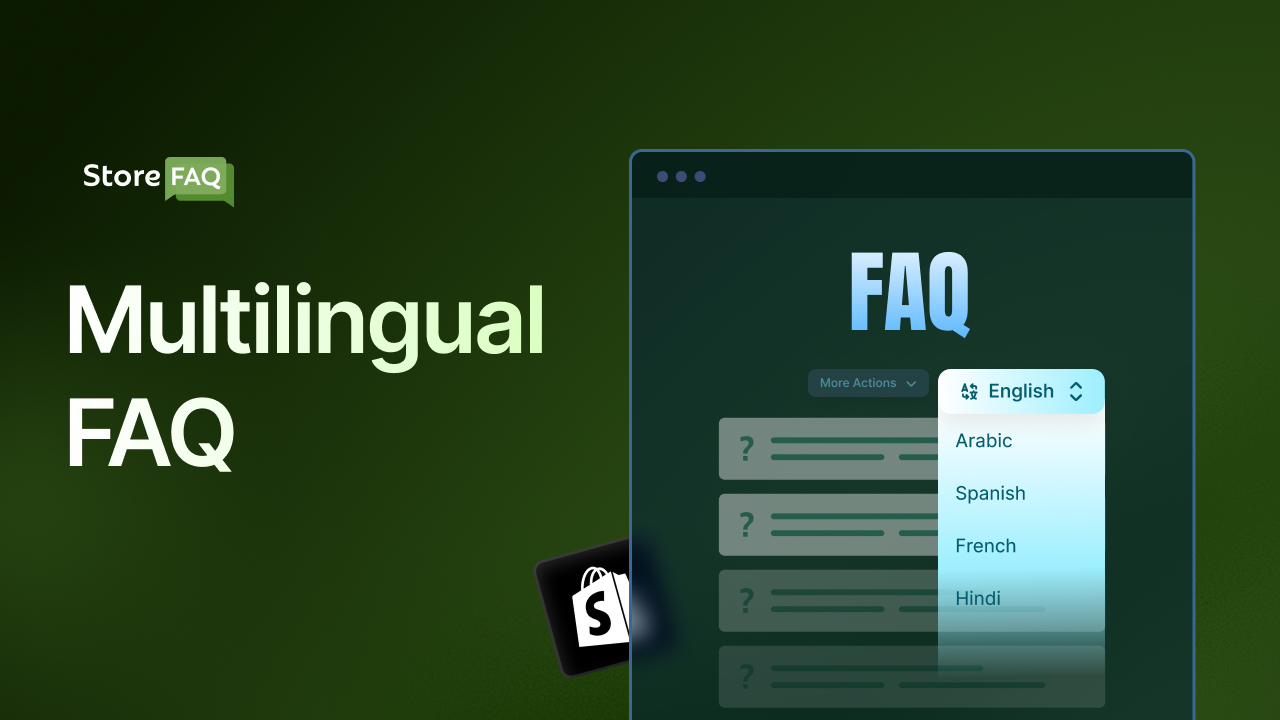
Multilingual stores have an extra edge here, because conversational queries arrive in many languages. Serving FAQs in multiple languages helps you answer question-based intent for a global audience well beyond English speakers.
Common Misconceptions
Several myths slow stores down. Clearing them up makes the path forward obvious.
| Myth | Reality | Why It Matters |
| Keywords are dead. | Keywords still guide topics; intent and structure now decide visibility. | You keep keyword research but reframe it around questions. |
| AI search killed SEO. | AI search rewards the same fundamentals: clarity, structure and authority. | Good SEO work compounds into AEO and GEO gains. |
| Zero-click means no value. | Visibility and citation inside results build authority even without a click. | You measure presence and mentions, not only sessions. |
| FAQ pages are just for support. | FAQ content is prime question-based intent fuel for AI search. | A support asset becomes a discovery asset. |
| You need a developer for the schema. | Apps generate FAQ schema with no code. | Any store can implement this in an afternoon. |
Measuring Visibility in A Zero-Click World
When SparkToro data shows roughly half of Google searches ending without a click, clicks alone stop telling the full story. You need metrics that capture presence inside the search experience.
- Impressions and AI Overview appearances in Google Search Console for question queries.
- AI citation share: how often your brand is named or cited in ChatGPT, Gemini and Perplexity answers.
- Referral traffic from AI platforms, tracked as a grouped channel in your analytics.
- Featured snippet and People Also Ask coverage for your target questions.
- Support ticket volume, which falls as your FAQ content answers questions upstream.
The goal shifts from counting visits to confirming you are present, cited and trusted wherever the answer is delivered.
Future Trends in Search Behavior
Search behavior will keep moving toward conversation, context and action. A few trends are already taking shape and are worth preparing for now.
- Agentic shopping: AI assistants will complete tasks for shoppers, going past simple answers. Shopify’s Agentic Storefronts already let shoppers discover products inside AI tools, and Shopify reports a 15x increase in orders from AI search platforms since early 2025.
- Multimodal search: people will combine text, voice and images in a single query, so descriptive, well-labeled content becomes essential.
- Entity-first ranking: engines will lean harder on entities and topical authority, rewarding stores that thoroughly answer clusters of related questions.
- Conversational follow-ups: searches will become multi-turn dialogues, so content that anticipates the next question wins the thread.
- Citation as the new ranking: being the source a model trusts will matter as much as being the top blue link.
Stores that treat customer questions as the foundation of their content will adapt to every one of these shifts, because questions are the common thread running through all of them.
Frequently Asked Questions
Is keyword SEO dead in 2026?
How is conversational search different from regular search?
What is the difference between SEO, AEO And GEO?
How do I find the questions my customers ask?
Does FAQ schema help with AI search?
Why is my traffic dropping even though rankings are stable?
What content format do answer engines prefer?
How do I measure visibility if there are no clicks?
Start Answering Questions Today, Not Keywords
Search behavior has already moved to question-based intent, and the stores that answer real customer questions clearly are the ones engines now choose. You do not need a rebuild to start. Pick the ten questions your customers ask most, then write a direct answer for each and publish them with FAQ schema so search engines and AI tools can extract and cite them.
The fastest first step for a Shopify store is to install StoreFAQ, generate your first FAQ group with A and publish it this week. Then watch your support inbox and your question-query impressions both move in the right direction.
If this blog helped you, please subscribe for more simple guides, tutorials and tips to grow your Shopify store.