


Not too long ago, ranking on Google meant one thing: get to the top of the search results page. If your link appeared first, you won. People clicked, visited your store, and that was the goal.
But search has changed dramatically. Today, millions of people do not even click a link. They ask a question on Google, on Siri, on ChatGPT, on Perplexity, and they get a direct answer right there on the screen. No clicking required.
This shift is reshaping how businesses need to think about visibility online. And for Shopify store owners, it raises an important question: Is your store set up to be found in this new kind of search landscape?
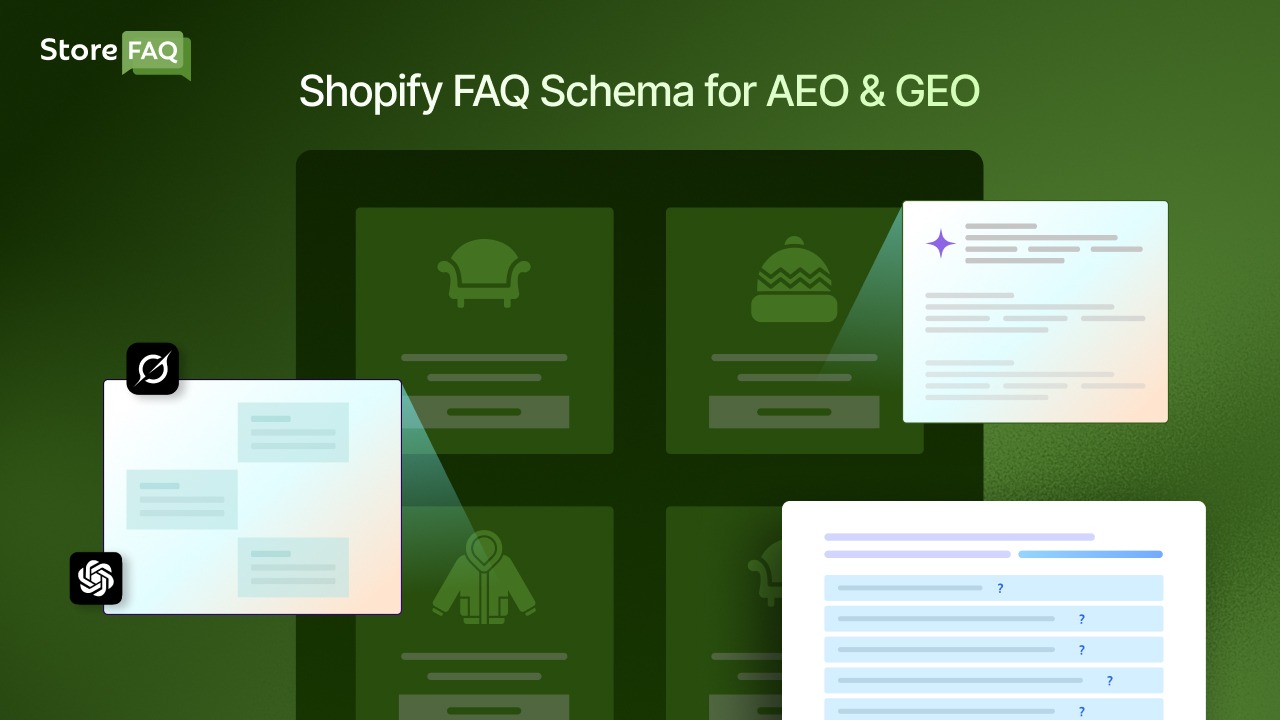
That is exactly what this blog is about. We are going to break down two emerging but critically important concepts, AEO (Answer Engine Optimisation) and GEO (Generative Engine Optimisation), and explain how something as practical as a Shopify FAQ Schema can put your store right in front of the customers who are looking for what you offer.
We will also introduce you to StoreFAQ, a Shopify app built specifically to make structured FAQ data work hard for your store.
Let us start from the beginning.
What Is AEO? Answer Engine Optimisation Explained for Shopify
You are probably familiar with SEO, Search Engine Optimisation. It is the practice of making your website rank higher in search engine results. AEO takes that a step further, and in many ways, it is becoming just as important.
Answer Engine Optimisation (AEO) is the process of optimising your content so that search engines and virtual assistants can extract direct answers from it. These answers are then presented to users without requiring them to click through to a website.
Think about what happens when you ask Google a question like “How long does Zara take to deliver?” or “What is the return policy for Amazon?” In many cases, you see a box at the top of the results page with a direct answer. That box is called a Featured Snippet or a Direct Answer Box. The website whose content is pulled into that box gets enormous visibility, even if the user never clicks the link.
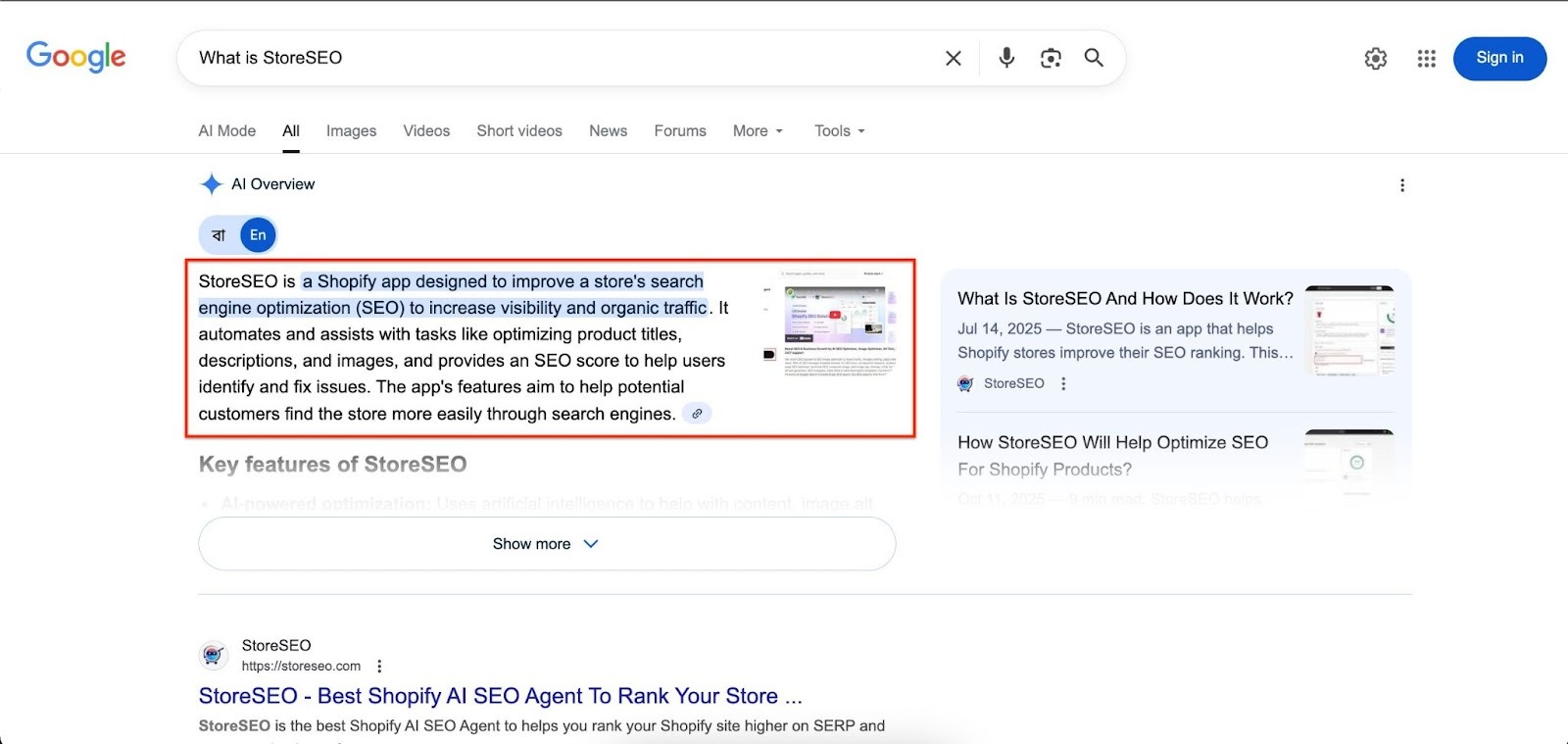
That is AEO in action. It sits within the broader semantic SEO ecosystem, alongside entity optimisation, knowledge graphs, and structured data, all of which help machines understand not just words, but meaning and relationships.
Voice search takes this even further. When someone asks Alexa, Siri, or Google Assistant a question, the assistant reads out a single answer. There are no links read aloud. There is no second option. The assistant picks one source, extracts the answer, and delivers it. If your content is not structured in a way that makes it easy to extract, it will not be chosen.
AEO is about making your content answer-ready. It means structuring your information, especially your FAQs, in a way that search engines can understand, extract, and present confidently.
For Shopify stores, this is a massive opportunity. Customers ask questions about products, shipping, returns, sizing, and payments every single day. If your FAQ content is properly structured with schema markup, your store becomes the source of those answers.
What Is GEO? Generative Engine Optimisation And AI Search Visibility
GEO is newer, and it is even more tied to where search is heading right now.
Generative Engine Optimisation (GEO) is the practice of optimising your content to be cited, referenced, or summarised by AI-powered search tools. These include Google’s AI Overviews, ChatGPT, Perplexity, Bing Copilot, and other generative AI platforms.
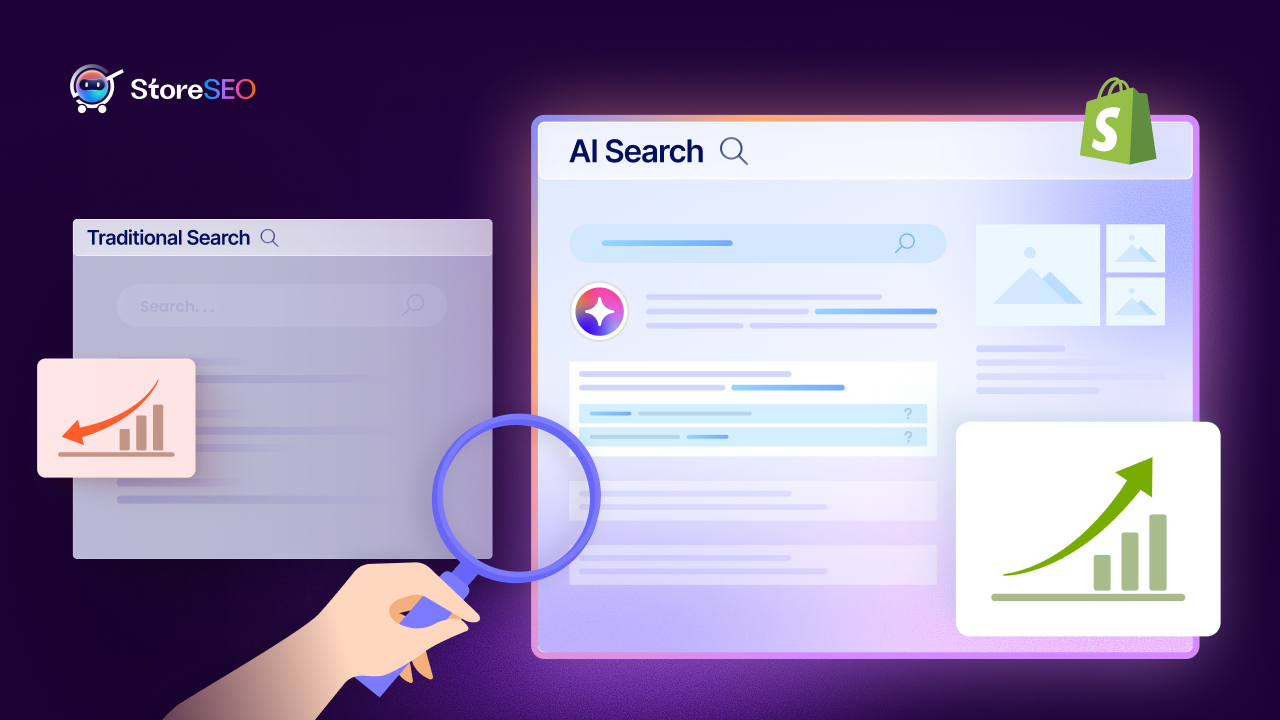
Here is the shift that GEO addresses. Increasingly, when people search for something, they are not seeing a traditional list of ten blue links. They are seeing an AI-generated summary at the top of the page, a paragraph or two that synthesises information from multiple sources and delivers a complete answer instantly.
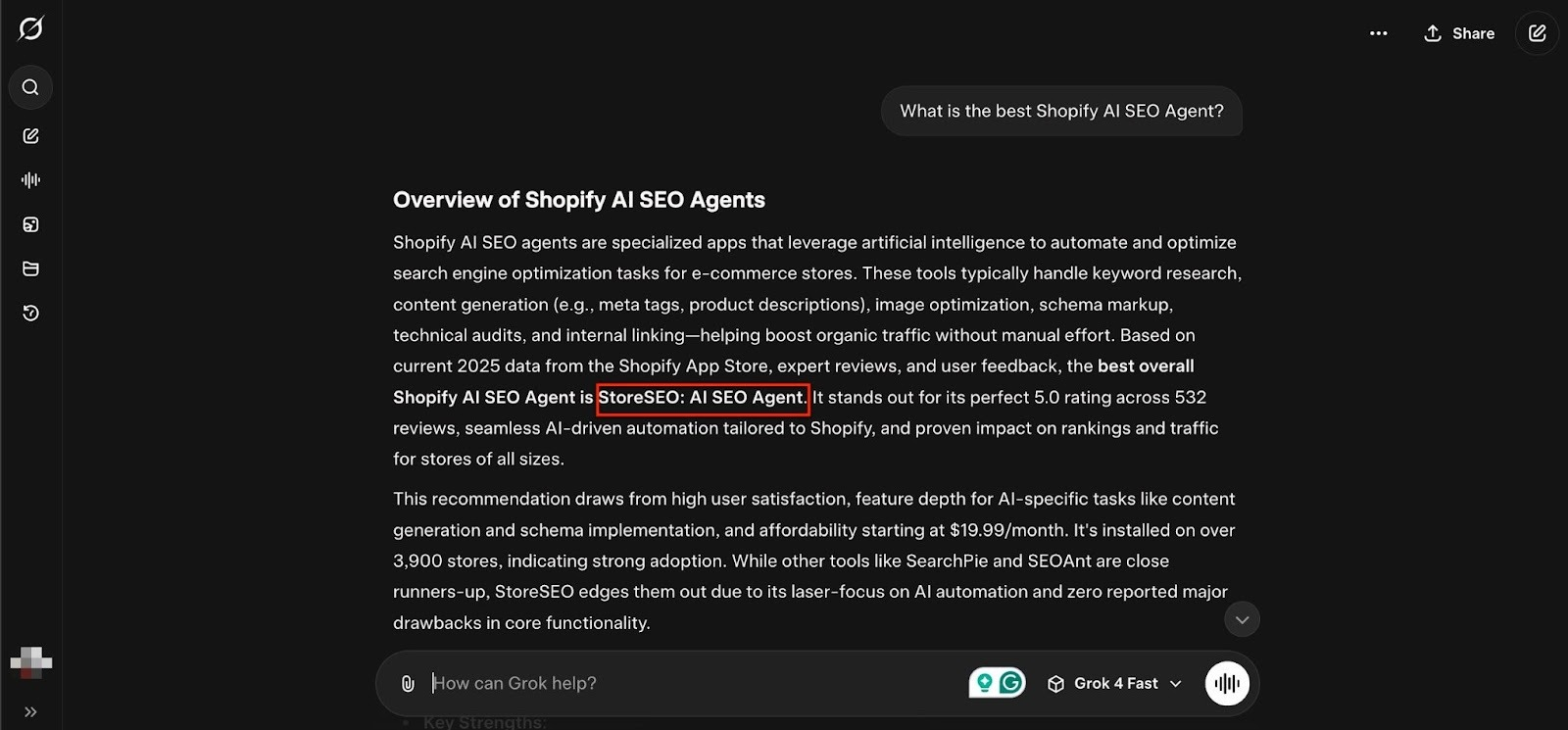
Google’s AI Overviews now appear on a significant portion of search queries. Perplexity and ChatGPT are being used by millions of people to research products, compare options, and get recommendations. These tools do not just pick one website. They pull from multiple sources and generate a response. But the sources they pull from are the ones with clear, credible, and well-structured content.
GEO is about ensuring your content is the kind that AI systems trust and use. Generative models read relationships between concepts, not just surface-level keywords. That is why structured data is so powerful in this context. It creates explicit, machine-readable relationships that AI systems can follow and cite with confidence.
Let us say someone asks ChatGPT: “What should I look for in a Shopify store’s return policy before buying?” If your FAQ content is well-structured, clearly written, and properly formatted with schema markup, there is a real chance an AI tool surfaces your store’s information as part of its response.
That kind of visibility, being cited or referenced by an AI tool, is the new frontier of search marketing.
AEO vs GEO: Key Differences And Why Both Matter for Shopify SEO
It is easy to conflate the two because they are closely related. But here is a simple way to think about the distinction.
AEO is primarily about traditional search engines and voice assistants pulling direct answers from your content. It is about Featured Snippets, voice search results, and Direct Answer Boxes on Google. The goal is to have your content selected as the answer to a specific question.
GEO is about AI-powered search and generative tools, such as ChatGPT, Perplexity, and Google’s AI Overviews, that synthesise content from across the web. The goal is to have your content trusted, cited, and referenced as AI systems generate comprehensive answers for users.
Both require the same foundational approach: structured, clear, and well-formatted content that machines can read, understand, and trust. And both reward Shopify merchants who invest in that foundation.
The good news is that the steps you take to improve one will almost always improve the other. A well-structured FAQ with proper schema markup helps you win in both landscapes simultaneously.
What Is FAQ Schema?
Now let us get into the technical side, but do not worry, we will keep it simple. Schema markup (also called structured data) is a type of code that you add to your website to help search engines understand your content better. It does not change how your page looks to visitors. It works behind the scenes, essentially giving search engines a labelled, organised version of your content that is much easier to interpret.
Think of it like this. Imagine you hand someone a box of puzzle pieces versus a completed puzzle. Both contain the same information, but the completed puzzle is instantly understandable. Schema markup is like completing the puzzle for search engines.
FAQ Schema is a specific type of structured data, defined at schema.org/FAQPage, that tells search engines: ‘This content is a list of questions and answers.’ It is typically implemented using JSON-LD, the format recommended by Google’s Search Central documentation.
When you implement the FAQ schema correctly, that JSON-LD code creates a direct pathway from your content to Answer Box eligibility. It signals to Google that your page contains structured question-and-answer pairs, which makes it a strong candidate for Featured Snippets and Direct Answer Boxes. From there, the same structured data feeds into AI Overview citation pipelines, because generative tools rely on the same machine-readable signals to identify trustworthy, well-organised content.
In short, the chain looks like this: FAQ Schema, built in JSON-LD, leads to structured data recognition, which opens the door to Answer Box eligibility, which then positions your content for AI Overview citations.
How FAQ Schema Drives AEO And Featured Snippet Rankings
For AEO, FAQ schema signals directly to Google that your content is question-and-answer formatted. Google is then far more likely to pull your answers into Featured Snippet and Direct Answer Boxes. When someone asks Google ‘Does your store offer free returns?’, and your FAQ has schema markup, there is a strong chance Google surfaces your answer directly on the results page.
Voice assistants work the same way. They favour clean, question-and-answer formatted content. FAQ schema makes yours a prime candidate for voice search responses, where only one answer is read aloud, and that answer is everything.
How FAQ Schema Boosts GEO And AI Overview Citations
For GEO, structured FAQ data gives AI systems clean, well-labelled content to work with. AI tools like Perplexity and Google’s AI Overviews are trained to trust content that is clearly structured and consistently formatted. The FAQ schema essentially says to an AI system: ‘Here is a question. Here is the precise answer. This is credible, structured information.’ That is exactly the kind of content these systems prefer to cite.
Generative models read relationships between entities, not just isolated keywords. When your FAQ schema connects a question entity to an answer entity with consistent, well-formatted markup, AI systems can map that relationship and use it in generated responses. This is why entity layering, linking your FAQ Schema to broader concepts like your product category, store policies, and brand, strengthens your GEO position significantly.
A JSON-LD FAQ Schema Example for Shopify Product Pages
Here is a simple example of what FAQ schema looks like in JSON-LD format, the format Google recommends for all structured data:
{

  "@context": "https://schema.org",

  "@type": "FAQPage",

  "mainEntity": [

    {

      "@type": "Question",

      "name": "Do you offer free returns?",

      "acceptedAnswer": {

        "@type": "Answer",

        "text": "Yes, we offer free returns within 30 days of purchase."

      }

    }

  ]

}
You can validate your JSON-LD implementation using Google’s Rich Results Test, which confirms whether your structured data is correctly formatted and eligible for rich results in search.
How to Add FAQ Schema on Shopify
Most Shopify themes do not add FAQ schema automatically. Having a FAQ page on your store is not the same as having structured data attached to it. The schema has to be explicitly implemented, either through code or through a dedicated app.
Adding FAQ Schema Manually vs. Using a Shopify App Without Coding
The manual route involves editing your Shopify theme’s Liquid files to inject JSON-LD structured data. This requires developer knowledge, careful attention to schema.org specifications, and ongoing maintenance to keep the markup aligned with your content. For merchants who do not have a developer on hand, this is often a significant barrier.
The automated route uses a dedicated Shopify app that handles the schema generation for you. Every FAQ you create is automatically wrapped in the correct JSON-LD format. There is no risk of syntax errors, outdated markup, or schema that falls out of sync with your content.
If you have been searching for information on how to add FAQ schema on Shopify without coding, an automated app is the most practical and reliable path. It removes the technical barrier entirely and keeps your structured data accurate as your content evolves.
Validating Your Shopify FAQ Schema JSON-LD with Google
After implementing FAQ schema, whether manually or through an app, you should validate your structured data using Google’s Rich Results Test and the Schema Markup Validator. These tools confirm that your JSON-LD is correctly formatted, that Google can parse it, and that your pages are eligible for rich results in search.
Validation is not a one-time step. Whenever you update your FAQ content, it is worth checking that your schema remains valid and complete. For merchants using an automated app, this is handled automatically, but it is still good practice to verify periodically.
Best Shopify FAQ Schema Apps for Automated Structured Data
For merchants who want FAQ schema without writing a single line of code, the Shopify App Store offers several dedicated options. Each one automatically generates JSON-LD structured data alongside your FAQ content, removing the technical barrier entirely. Here are the most notable apps to consider.
StoreFAQ
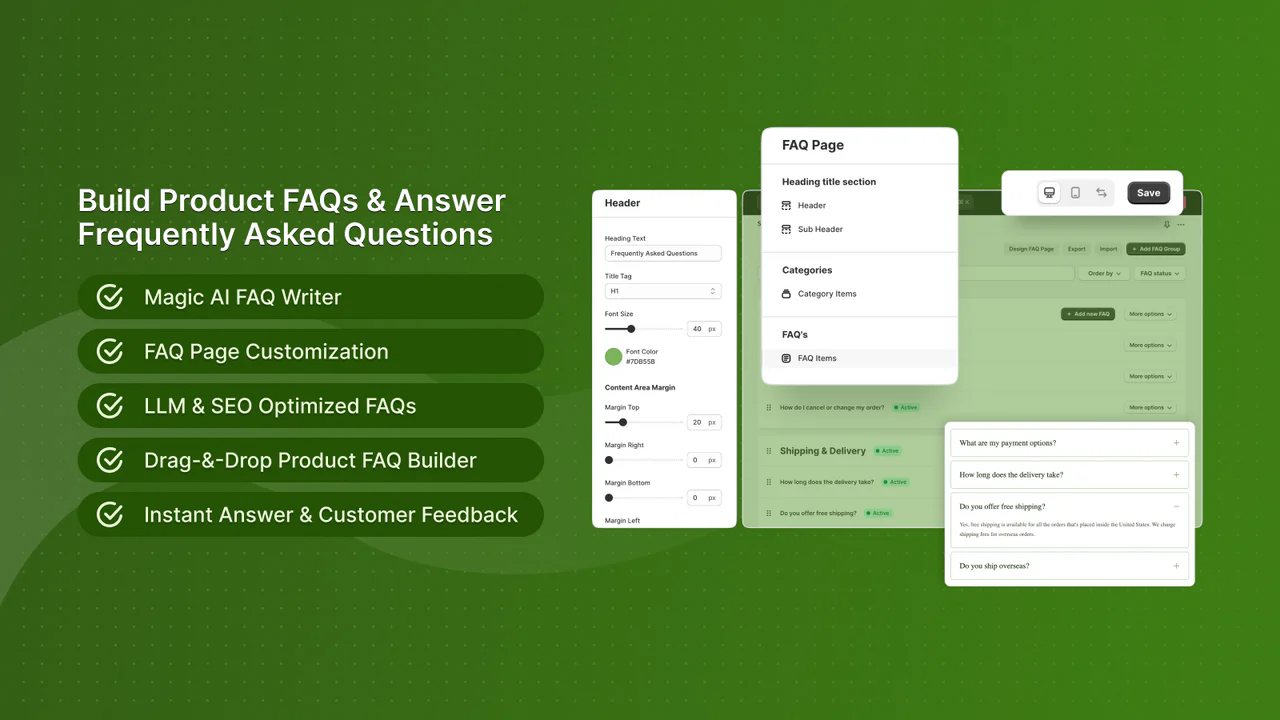
StoreFAQ is the most focused solution on this list. Built exclusively for Shopify FAQ management, it generates FAQ schema in JSON-LD format automatically for every question you publish. You can place FAQs on product pages, collection pages, and dedicated FAQ pages, with schema applied across all of them. Its drag-and-drop builder, category grouping, and AI-assisted answer writing make it the strongest choice for merchants who want FAQ schema and a polished on-site FAQ experience in one app, with no coding required.
- Rating: 4.9/5
- Built for Shopify Badge: Yes
Schema Plus for SEO
Schema Plus for SEO is a broader structured data app that handles automatic schema injection across multiple schema types, including Product and FAQ, making it a practical option for merchants who want FAQ schema as part of a wider structured data setup.
- Rating: 4.9/5
- Built for Shopify Badge: No
JSON-LD for SEO
JSON-LD for SEO by Ilana Davis takes a metafield-based approach. It supports the FAQPage structured data type and includes a built-in FAQ Generator, where you paste your questions and answers and the app creates the JSON-LD output automatically. FAQs can be added to product pages, collection pages, and blog posts.
- Rating: 4.9/5
- Built for Shopify Badge: No
HelpLab FAQ Page
HelpLab FAQ Page includes default support for Google rich SEO snippets on dedicated FAQ pages, with fully customisable themes and support for both store-wide and product-specific FAQs.
- Rating: 5/5
- Built for Shopify Badge: No
Why Most Shopify Stores Lack FAQ Schema and How You Can Get Ahead
Here is something worth pausing on. Despite all the benefits of the FAQ schema, the majority of Shopify stores do not have it implemented.
First, most Shopify themes do not add FAQ schema automatically. Having a FAQ page on your store is not the same as having structured data attached to it. The schema has to be explicitly implemented.
Second, many merchants simply do not know this is a thing. FAQ pages are built, published, and forgotten. The idea that a FAQ page can be an SEO asset, rather than just a support page, is not common knowledge yet.
Third, adding schema markup manually through code is technical. Not every merchant has a developer on hand, and even those who do often have more pressing development priorities.
This gap is actually good news for you. Because while your competitors are missing this opportunity, you can act on it. A well-structured, schema-powered FAQ page can give your store a meaningful edge in search visibility, especially in AEO and GEO, which most of your competitors have not even considered yet.
Shopify FAQ Schema in Action: AEO and GEO Results for Real Stores
Let us make this concrete. Here is how the FAQ schema can play out in real scenarios for your store.
Scenario 1: The Voice Search Win

A potential customer is driving and asks their phone: ‘Does your store ship internationally?‘ Your FAQ already answers that question with proper schema markup. The voice assistant reads out your answer. The customer hears your store’s name associated with a clear, helpful response. That is brand awareness and credibility built without a single ad dollar spent.
Scenario 2: The Featured Snippet
Someone Googles ‘what is the return policy for stores selling this product type?’ Your FAQ page, powered by schema, gets pulled into a Featured Snippet at the very top of the results page, above all the paid ads and organic results. Your answer is the first thing that user sees.
Scenario 3: The AI Overview Citation
A shopper uses Google’s AI Overview to research before buying. They ask: ‘What should I know about buying this product type online?’ Google’s AI synthesises content from several sources, including your FAQ, because it is structured, clear, and schema-marked. Your store gets cited in the AI-generated summary. The shopper sees your brand as a credible, informative source before they have even visited your store.
Scenario 4: The On-Site Conversion
Beyond search visibility, a customer on your product page sees an embedded FAQ section powered by StoreFAQ. Their question about sizing is answered right there. They do not have to leave the page to find information. They do not abandon their cart out of uncertainty. They complete the purchase. The FAQ is not just an SEO tool. It is a conversion tool.
Shopify FAQ Schema Best Practices for AEO, GEO, and Higher Conversions
Having the right tool is step one. Using it well is step two. Here are some practical tips to get the most out of your Shopify FAQ schema.
- Write questions the way customers actually ask them. Do not phrase FAQ questions in formal or corporate language. Write them the way a real customer would type or speak them. ‘How long does shipping take?’ not ‘What is the estimated delivery timeframe?’ The closer your questions match real search queries, the more likely they are to be matched by search engines and AI tools.
- Keep answers clear and direct. The first sentence of every answer should directly address the question. Do not bury the answer in context or preamble. Search engines and AI tools pull the most direct, concise answers. Get to the point, then elaborate if needed.
- Cover the full customer journey. Your FAQ should address questions from every stage: pre-purchase (product questions, sizing, compatibility), during purchase (payment, security), and post-purchase (shipping timelines, returns, tracking). The broader your coverage, the more search queries you become relevant for.
- Place FAQs on product pages, not just a dedicated FAQ page. FAQ schema JSON-LD on Shopify product pages is particularly powerful. It puts structured answers in the exact context where customers are making decisions and gives search engines very specific, product-relevant information to work with.
- Keep your FAQ updated. Outdated information in your FAQ hurts trust. Make it a habit to review and update your FAQ whenever policies, products, or processes change. With StoreFAQ, your schema updates automatically alongside your content.
Here is the truth about where search is going. Traditional SEO, getting to page one of Google, is still important. But it is no longer sufficient on its own.
The search landscape now includes voice assistants, AI-generated answers, featured snippets, and generative tools that millions of people use daily. These platforms are only going to grow in usage and influence. Brands that optimise for this new reality now will have a significant head start over those who wait.
AEO and GEO are not passing trends. They represent a fundamental shift in how people discover information online. And for eCommerce brands, they represent a shift in how customers discover products online.
Shopify FAQ schema sits right at the intersection of these trends. It is a practical, implementable strategy that directly feeds into both AEO and GEO. It is not theoretical. It is not experimental. It is a proven technical approach, structured data, that is actively rewarded by Google, used by AI tools, and increasingly expected as a baseline for serious e-commerce visibility.
StoreFAQ makes that strategy accessible without requiring technical expertise. It handles the complexity so you can focus on what you do best, running your store and serving your customers.
Your Shopify FAQ Page Is an Untapped SEO And AI Visibility Asset
Your FAQ page is not just a support resource. In the age of AEO and GEO, it is one of your most valuable pieces of content, a structured, question-and-answer formatted asset that search engines and AI tools are actively looking for.
By implementing the Shopify FAQ schema, you are telling Google, voice assistants, and AI platforms exactly what your content contains. You are making it effortless for them to surface your answers to the right people at the right time.
With StoreFAQ, you do not need technical knowledge to make this happen. You build your FAQ, the app handles the structured data, and your store gains the kind of search visibility that many Shopify merchants have not even started thinking about yet.
The shift in search is already happening. AEO and GEO are already influencing how customers find stores like yours. The question is whether your store is ready to meet them where they are searching.
Structured data. Clear answers. A tool that makes it simple. That is the formula and it starts with your FAQ. Was this blog helpful for you? If you found it beneficial and want more blogs like this, then you can subscribe to our blogs.